Concrete and pavers
Built from
the dirt up.
A driveway, patio or walk lasts when the ground under it is done right. Scroll to watch one go together, one layer at a time.
Five crews. One call.
All servicesConcrete and pavers
A driveway, patio or walk lasts when the ground under it is done right. Scroll to watch one go together, one layer at a time.
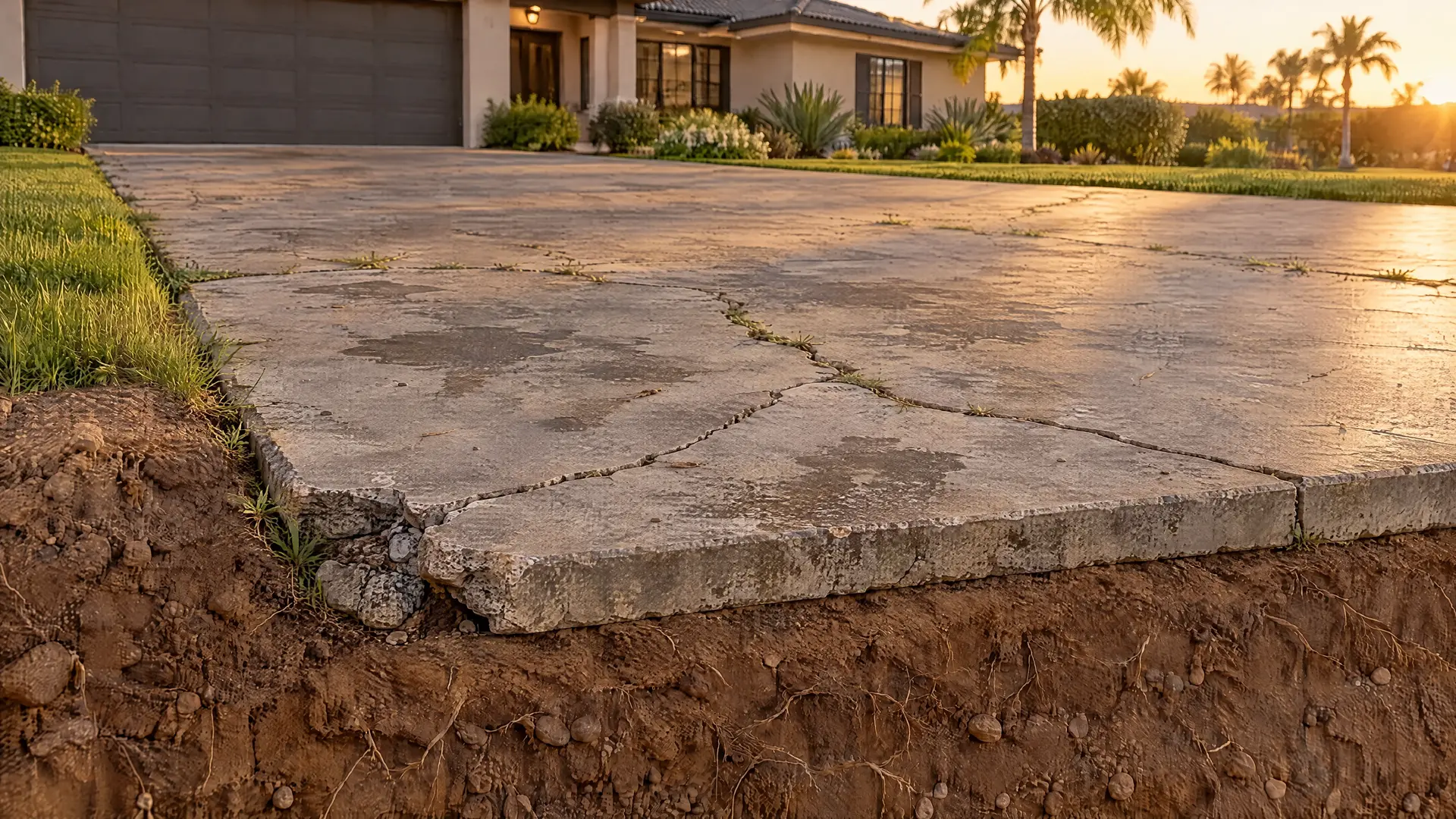
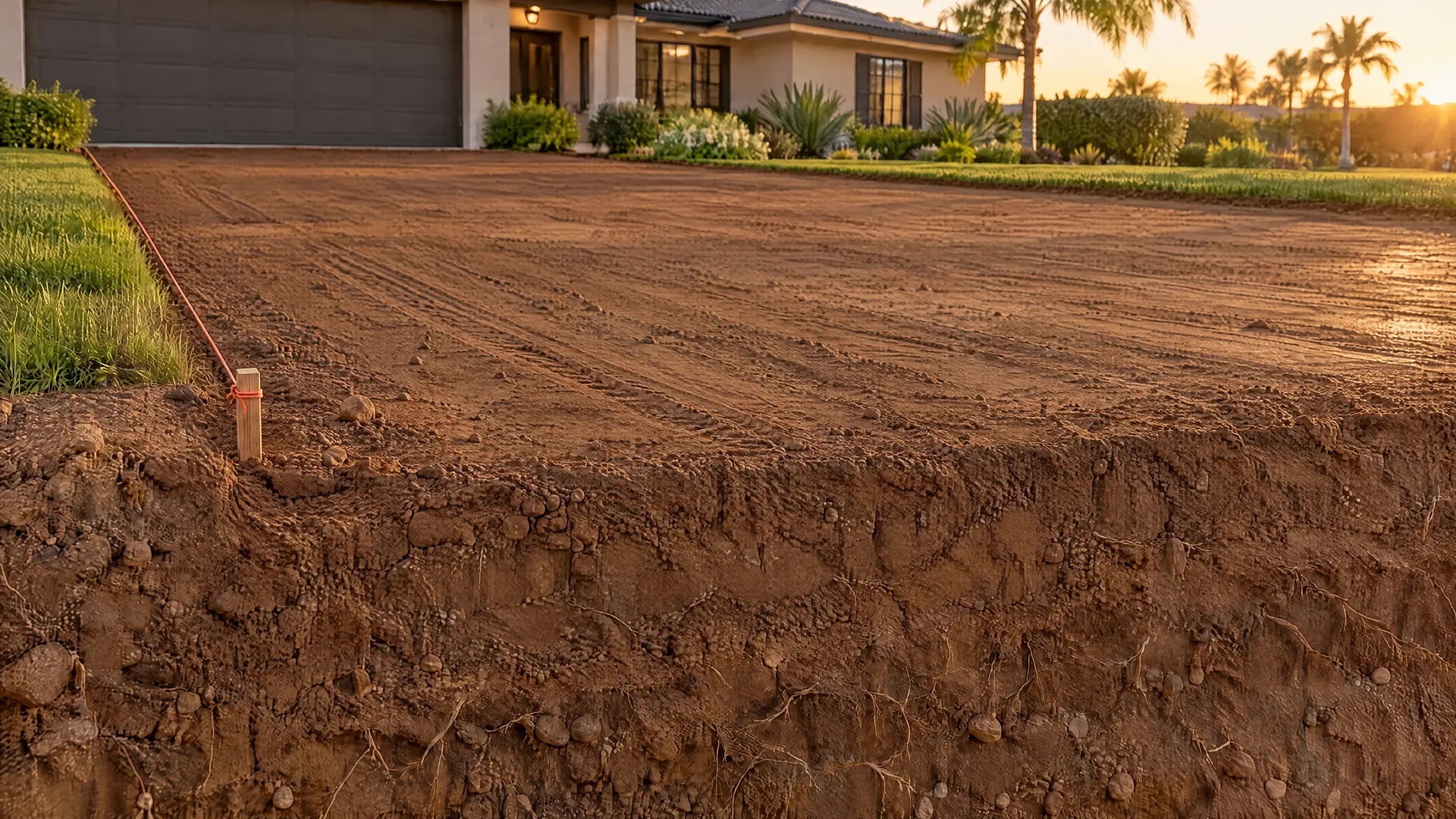
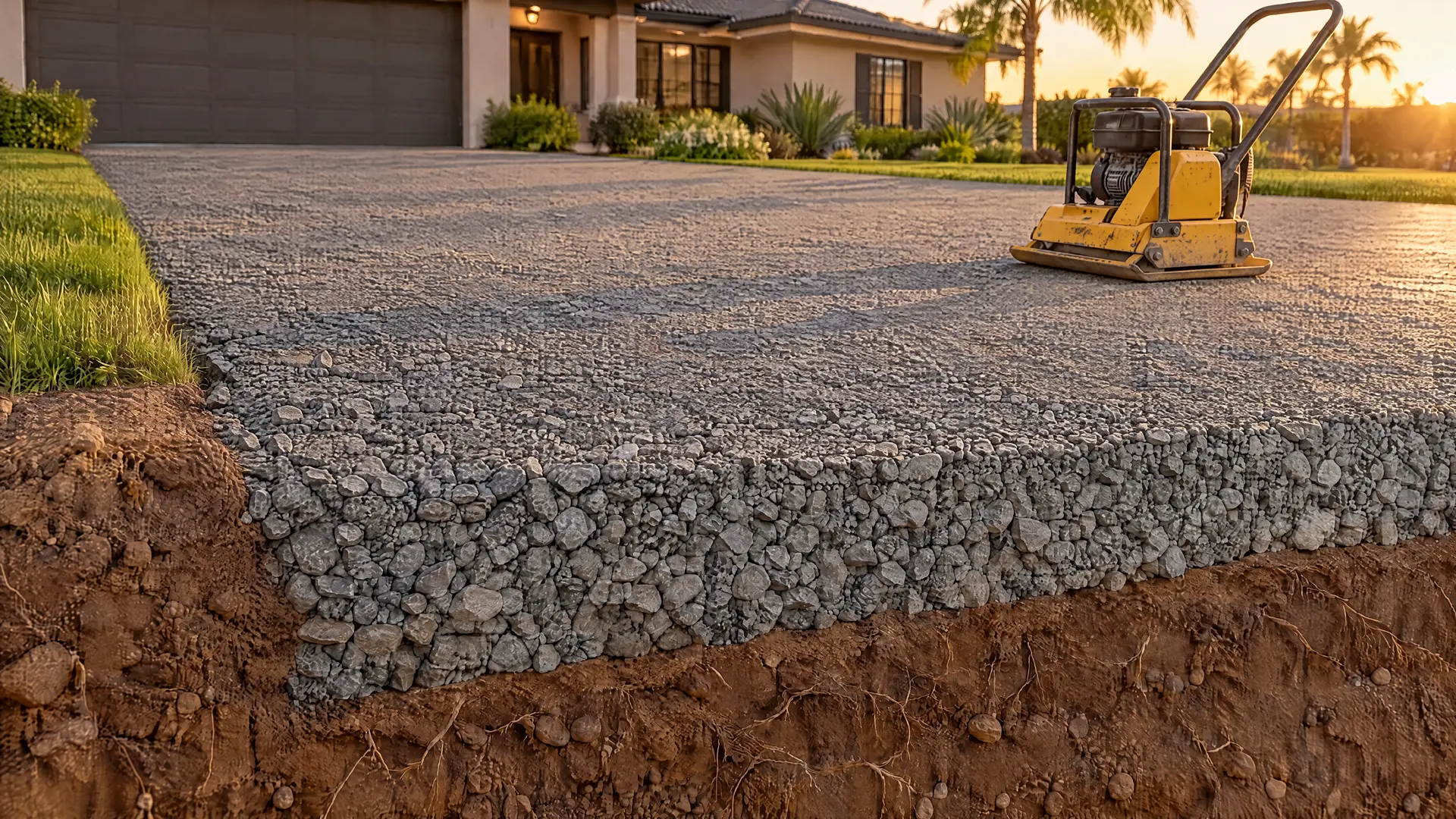
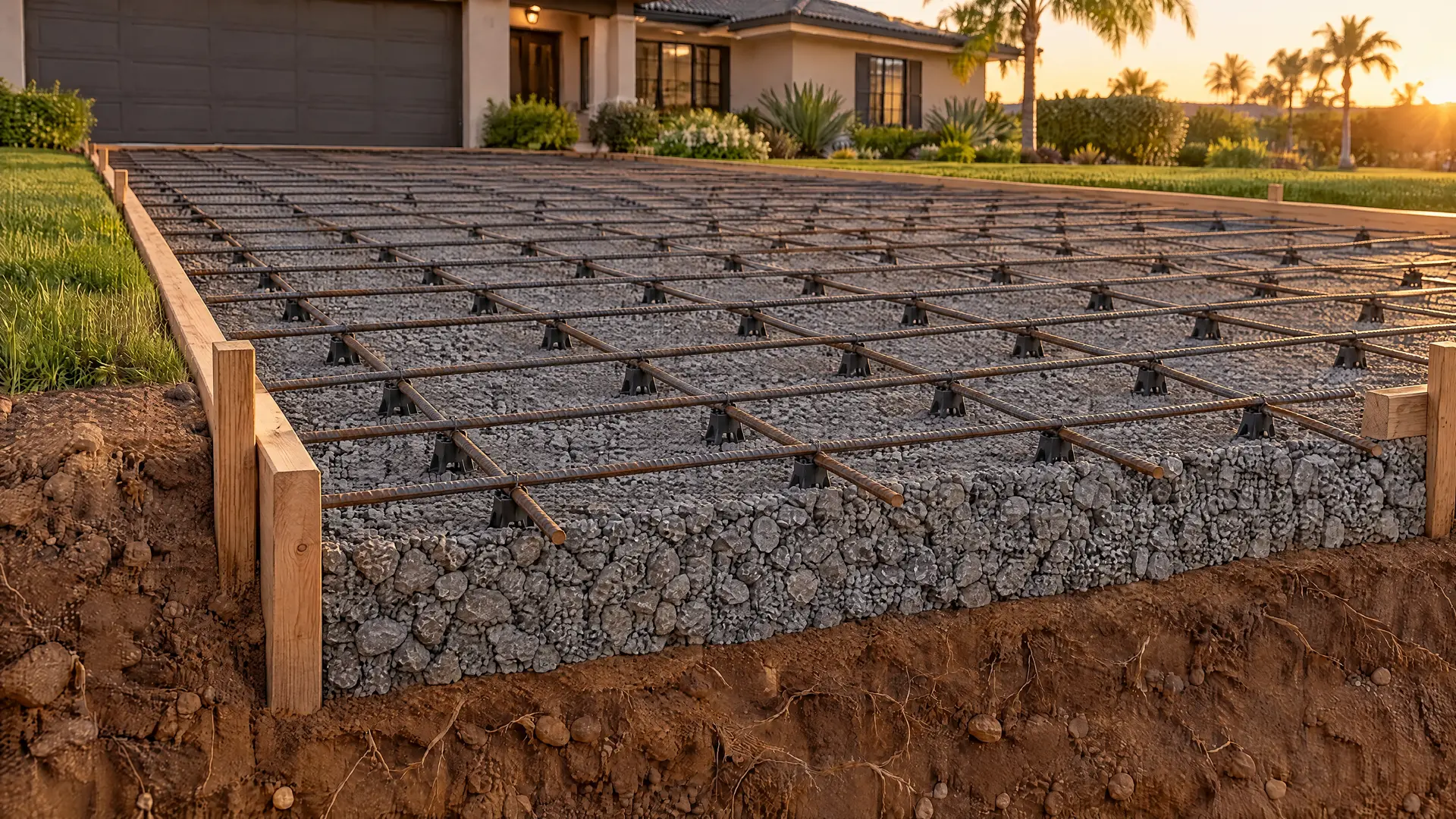
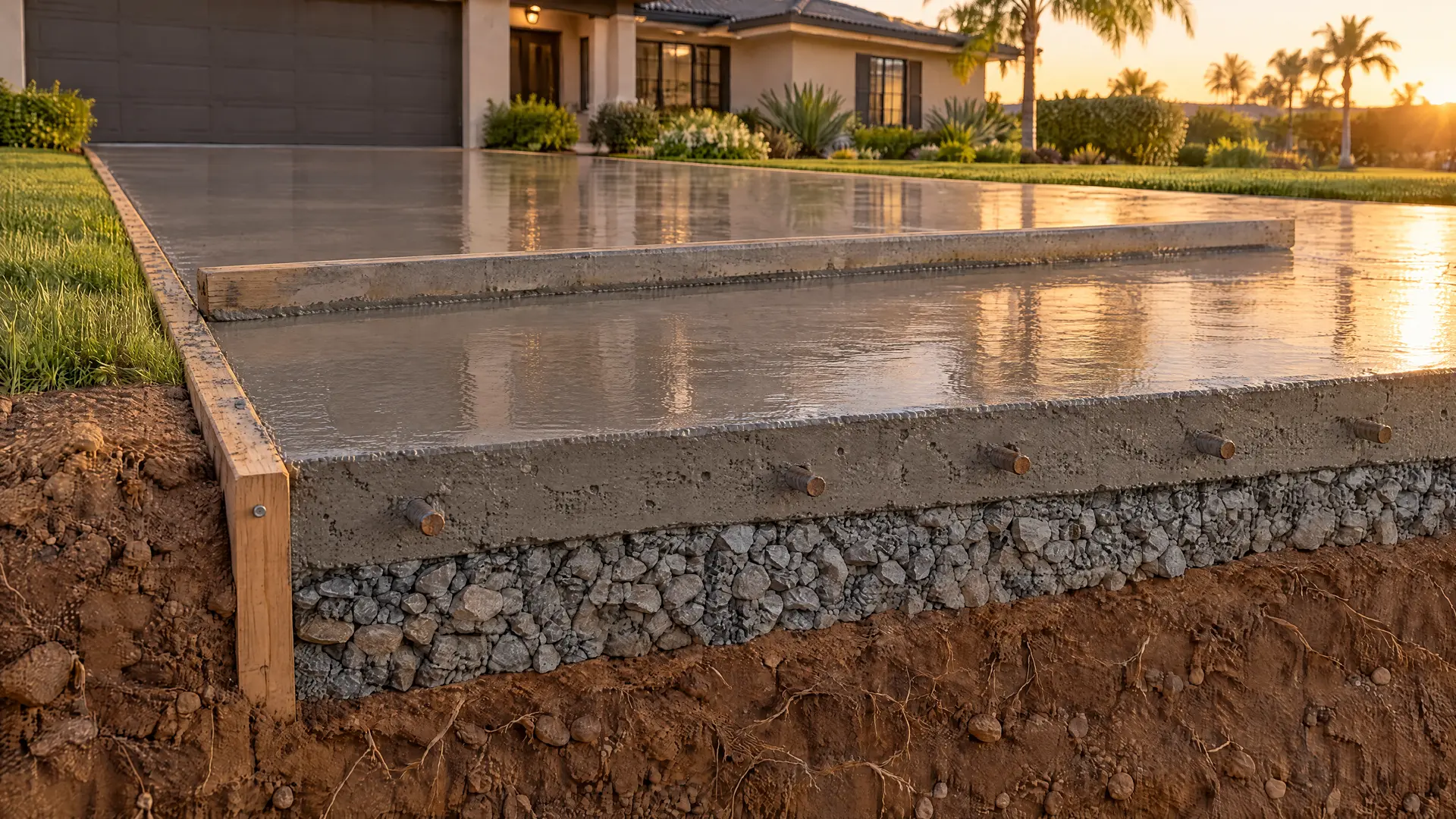
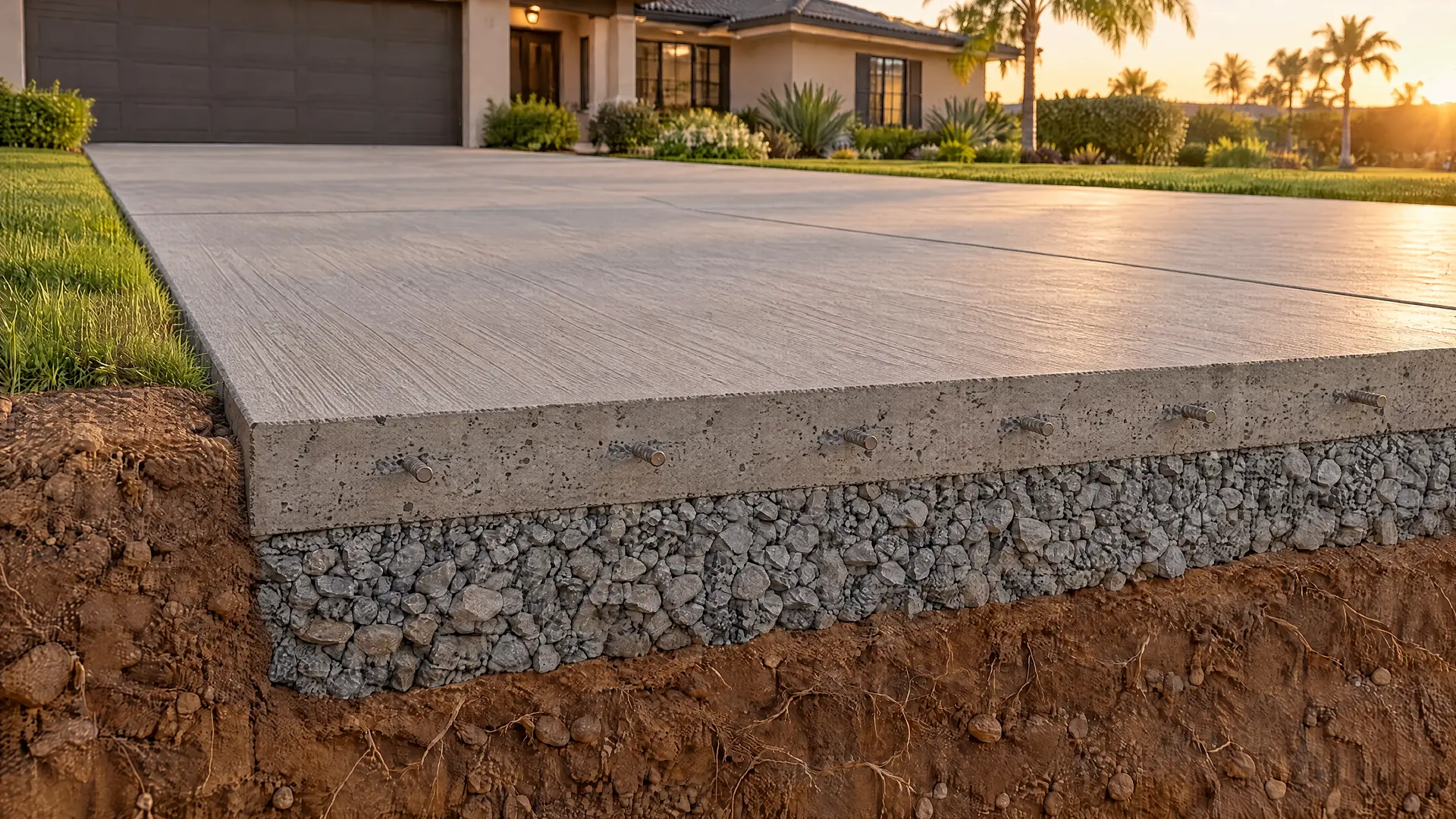
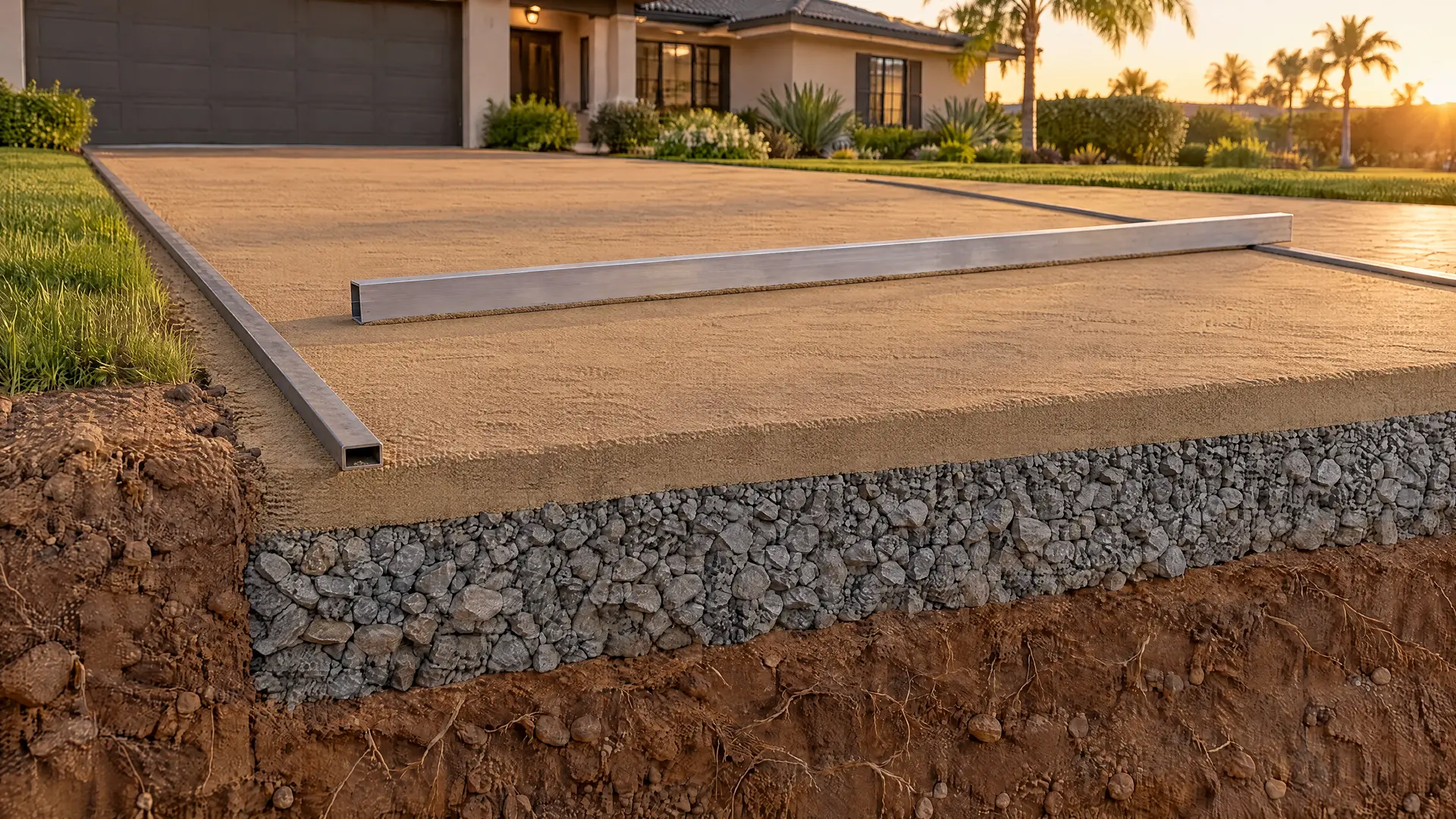
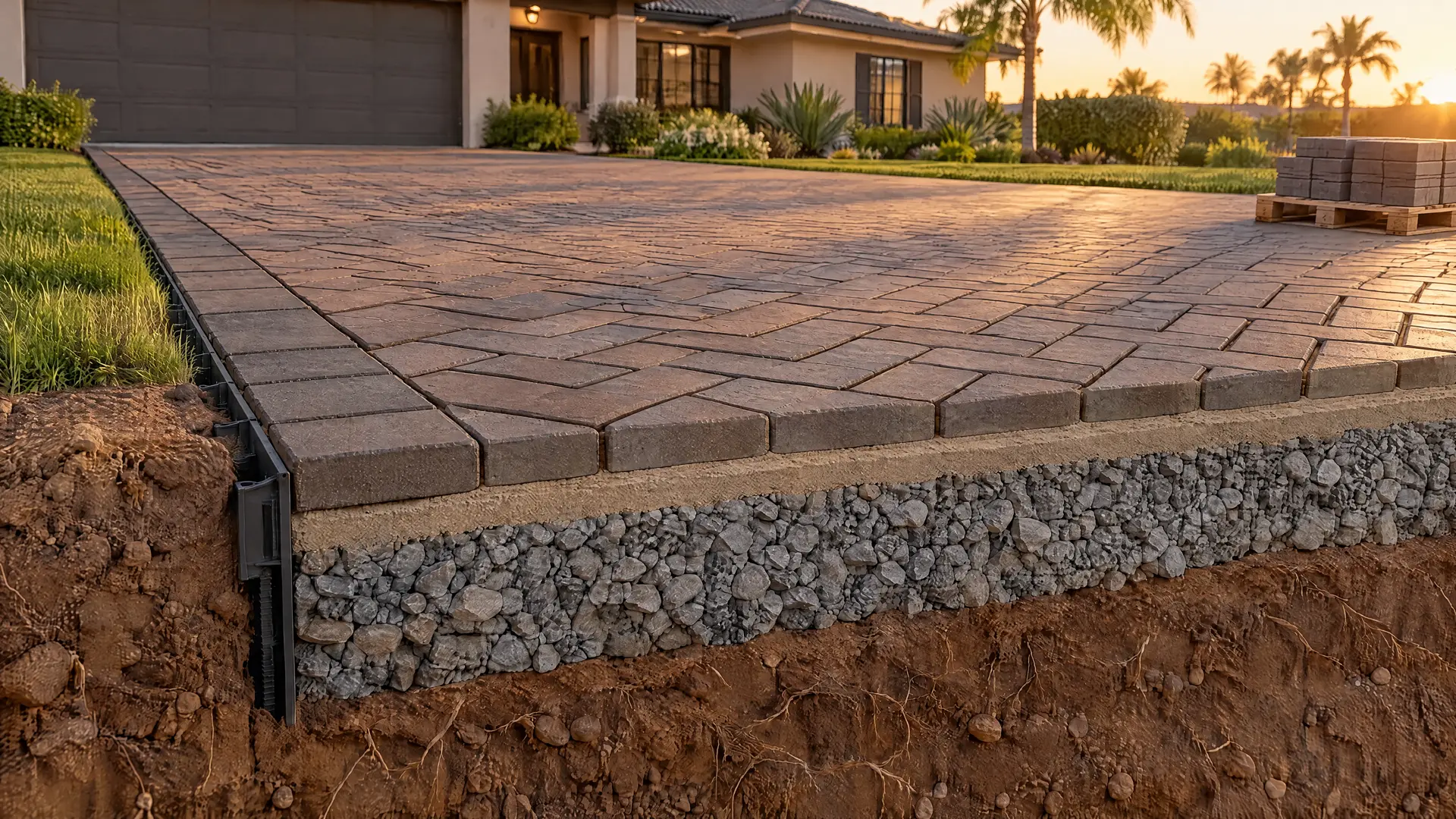
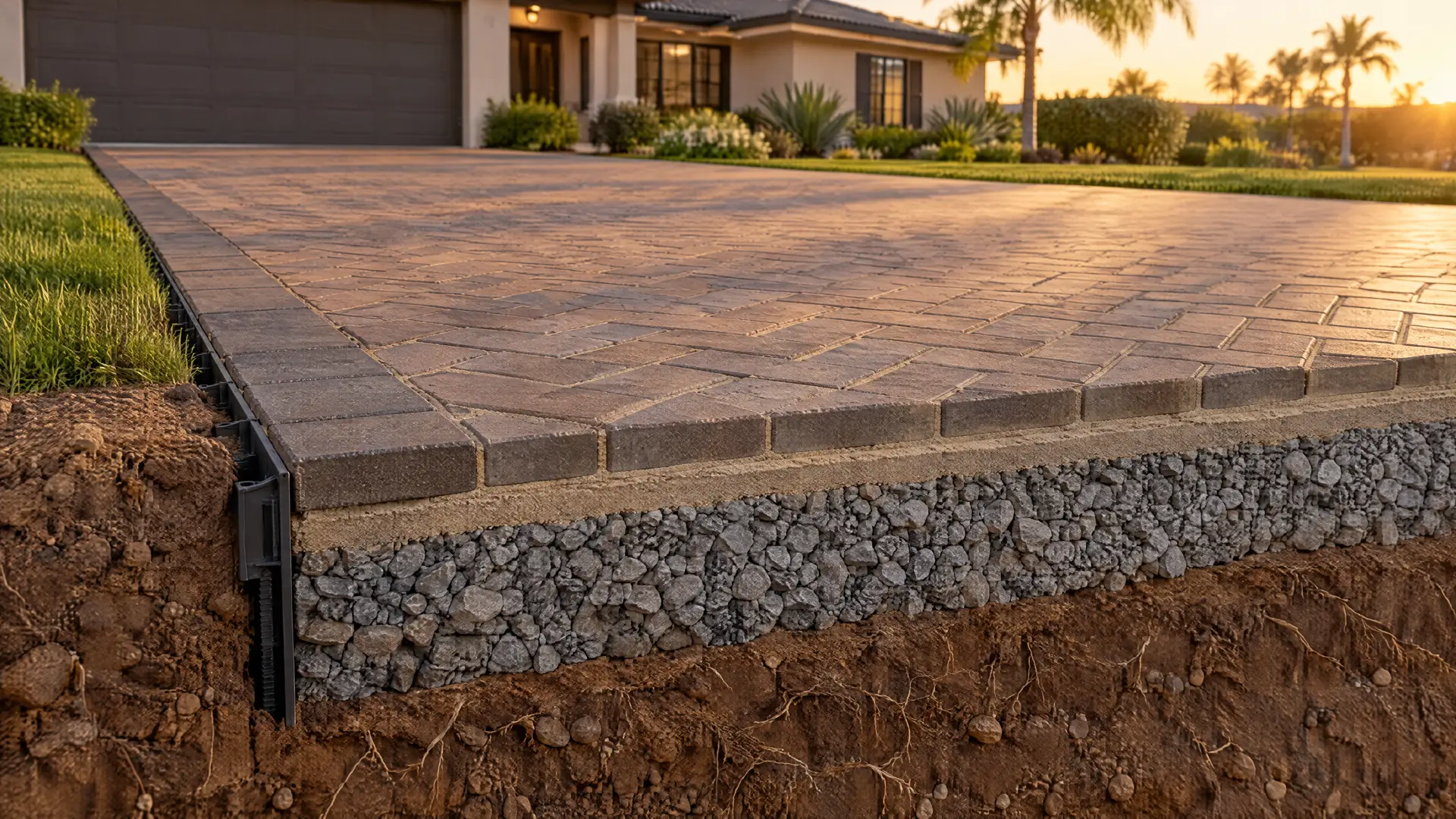
The corner of a driveway cut away to show its layers, one picture per step. A concrete driveway: graded native soil, compacted base rock, rebar on chairs inside wood forms, a concrete slab, and a broom finish with control joints. A paver patio: graded soil, base rock compacted in lifts, bedding sand, pavers with a border course, and sand-filled joints.
Illustration
Every job starts the same way: the old surface out, the ground graded, a compacted base. Then it becomes one of these.
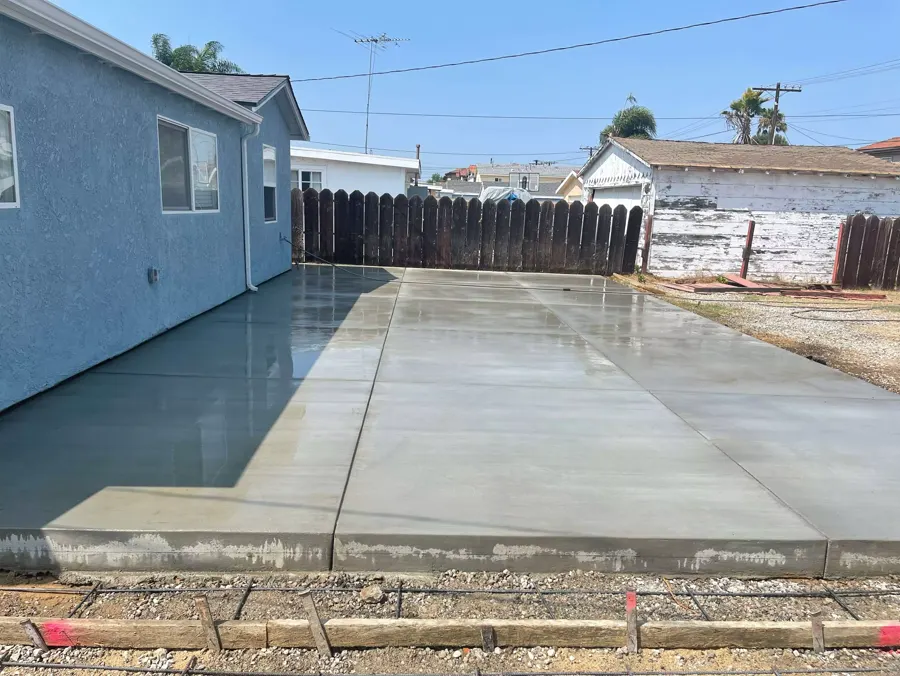
Broken out, re-graded and poured new, including the apron where it meets the street.
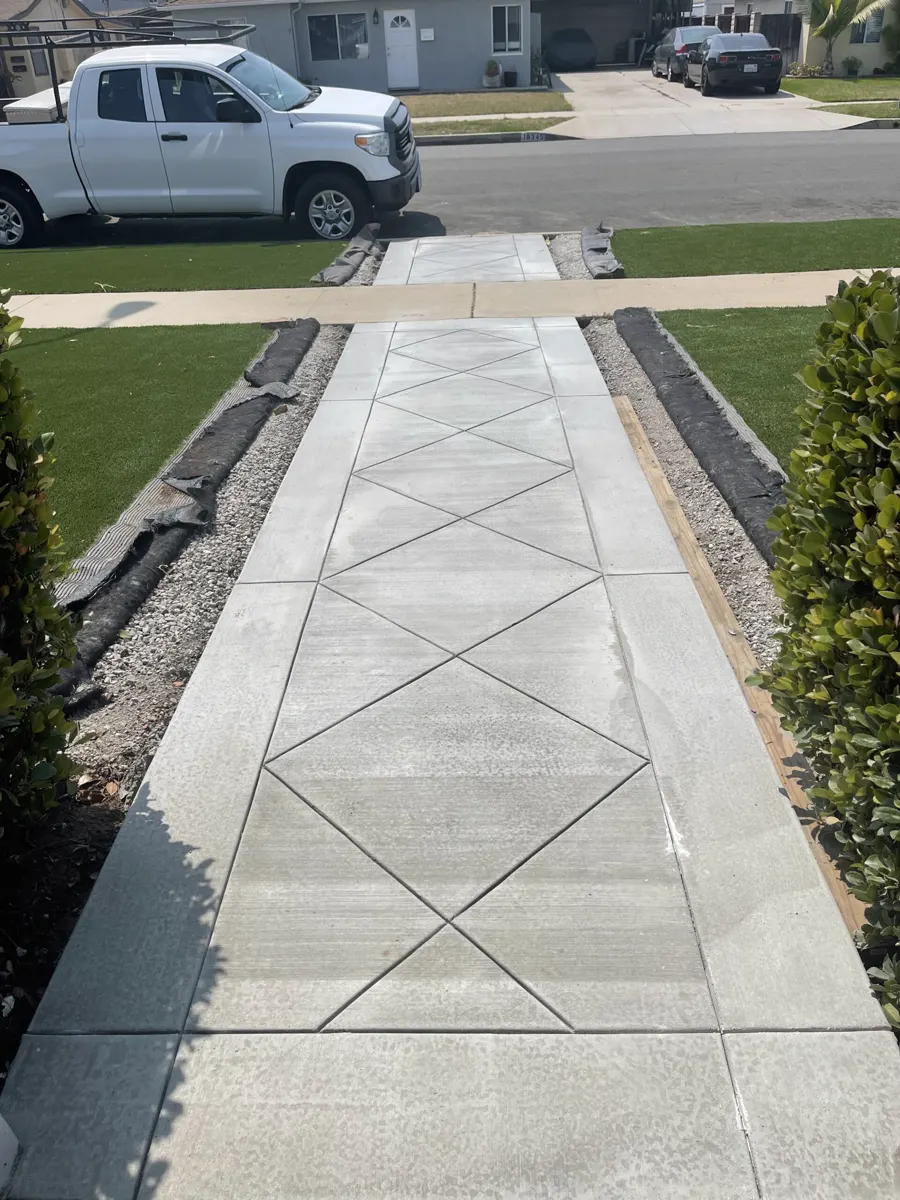
Front walks, side yards, patios, and slabs for sheds, carports and equipment.
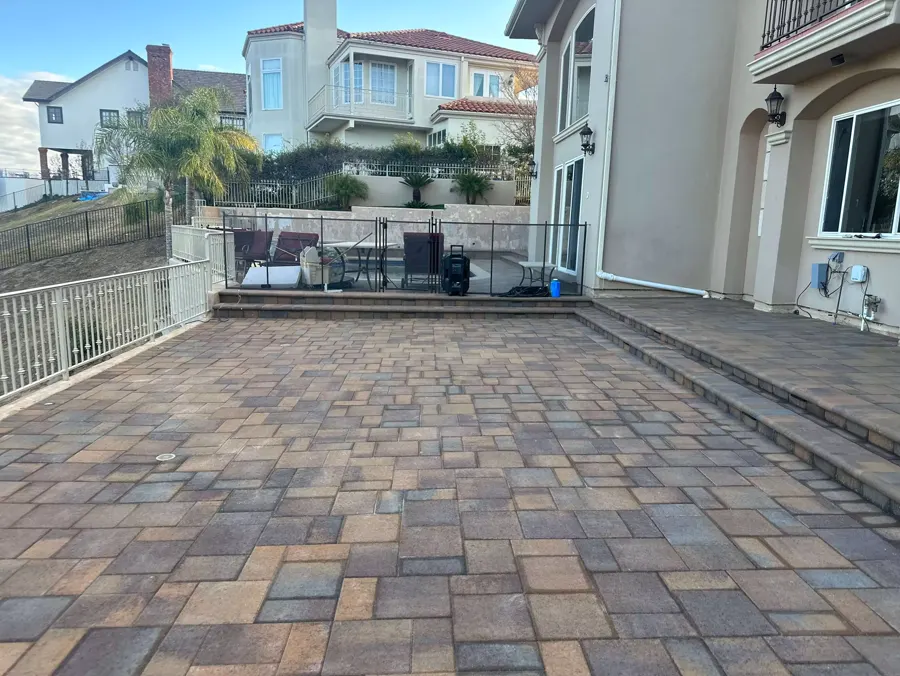
Pavers over a compacted base, in the pattern, color and border you pick.
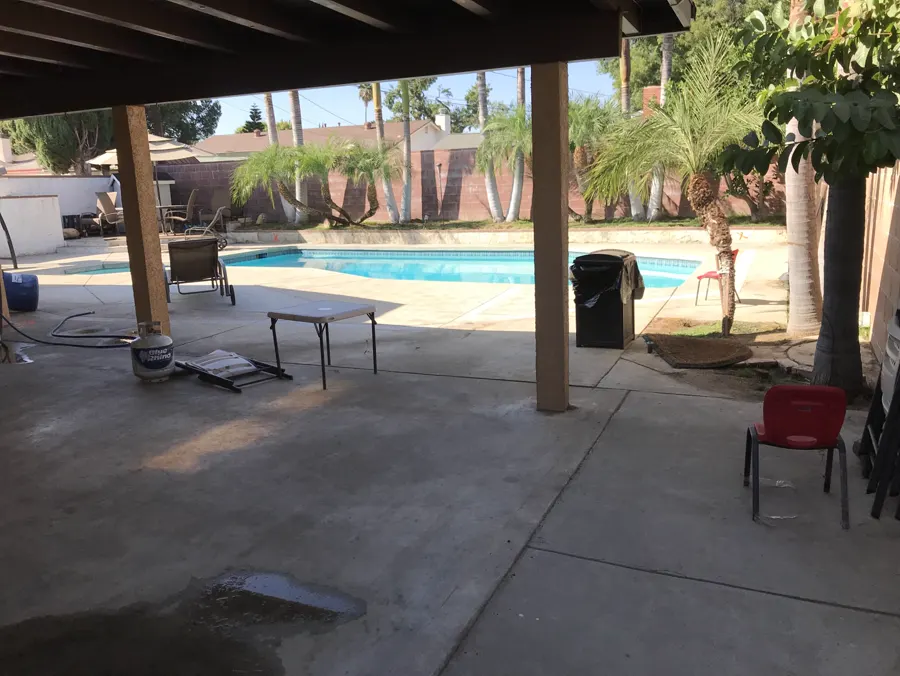
Decks around new and existing pools, finished for grip on wet feet.
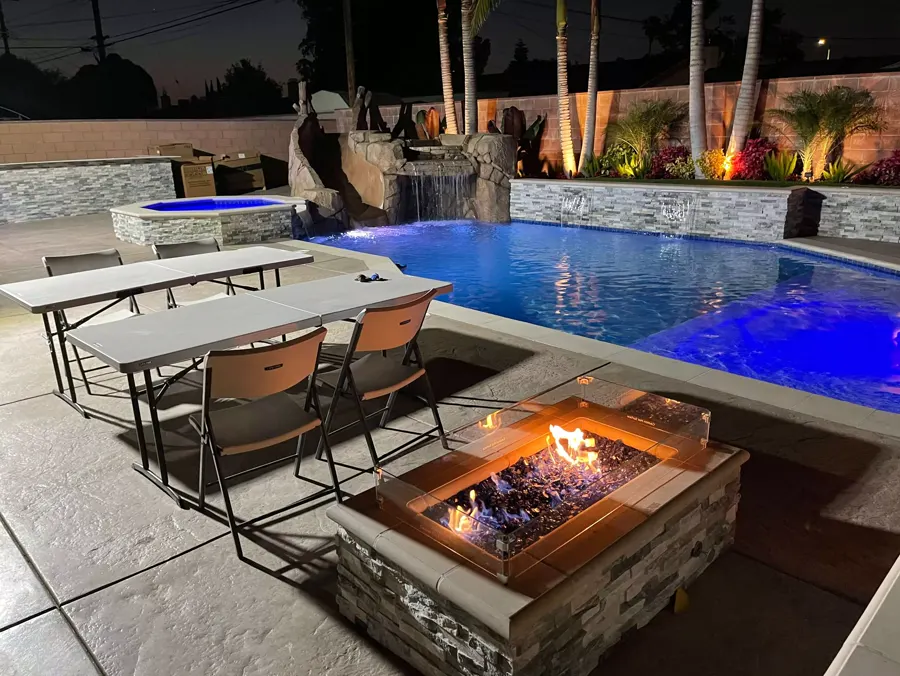
Low walls that hold back a slope or give a patio somewhere to sit.
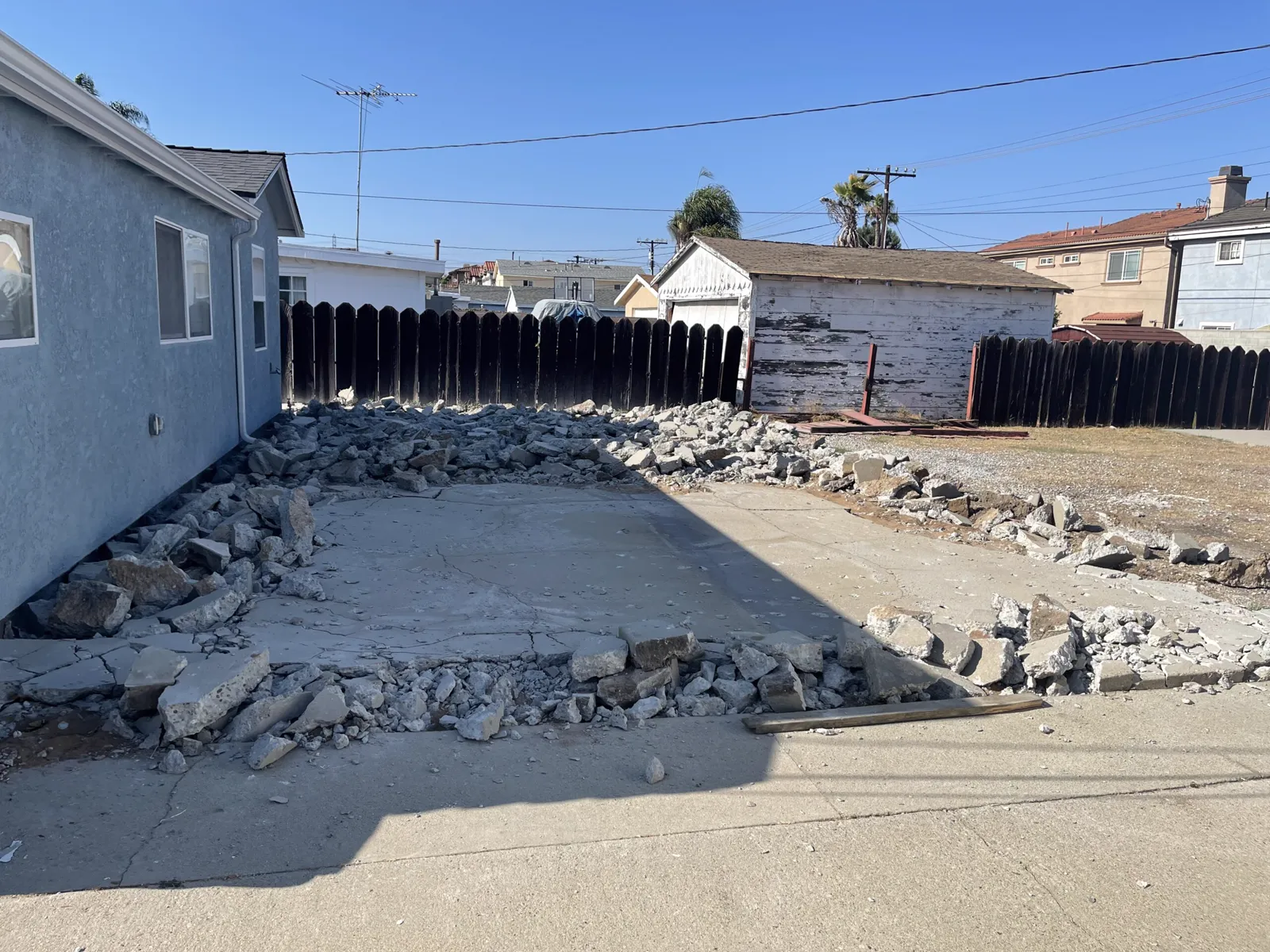
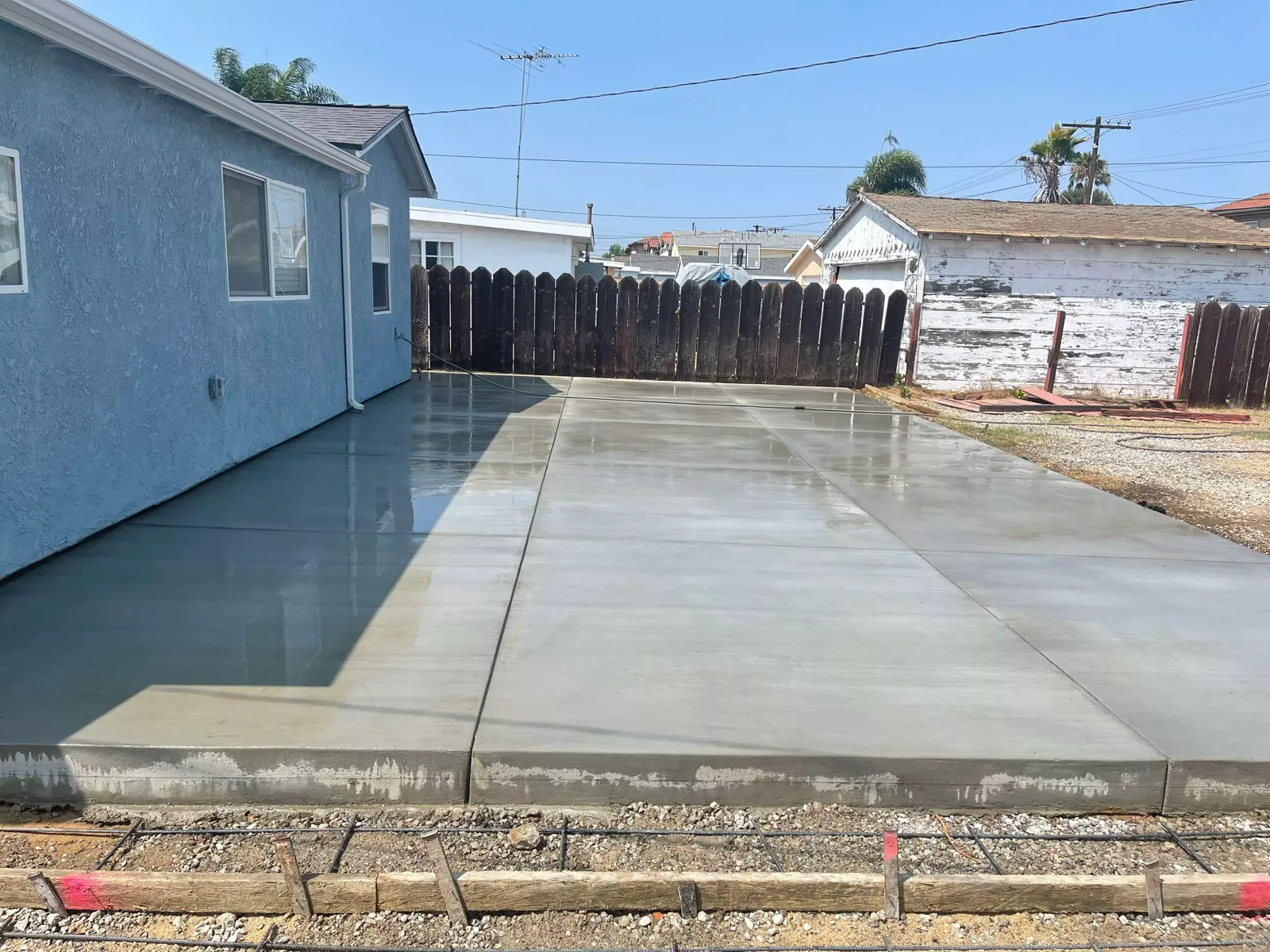
Photos from recent jobs, taken at each stage. Tap one to see it larger.
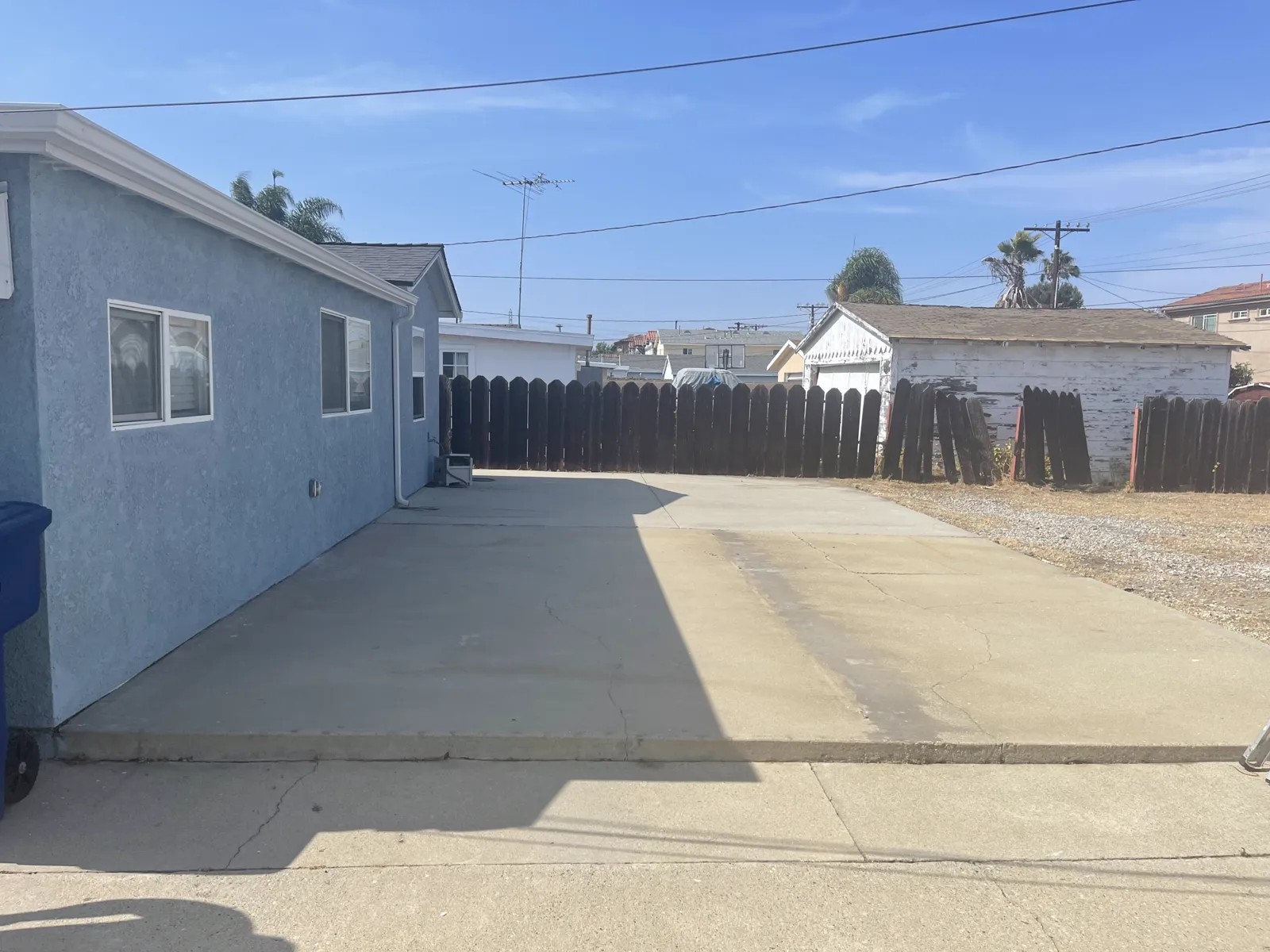
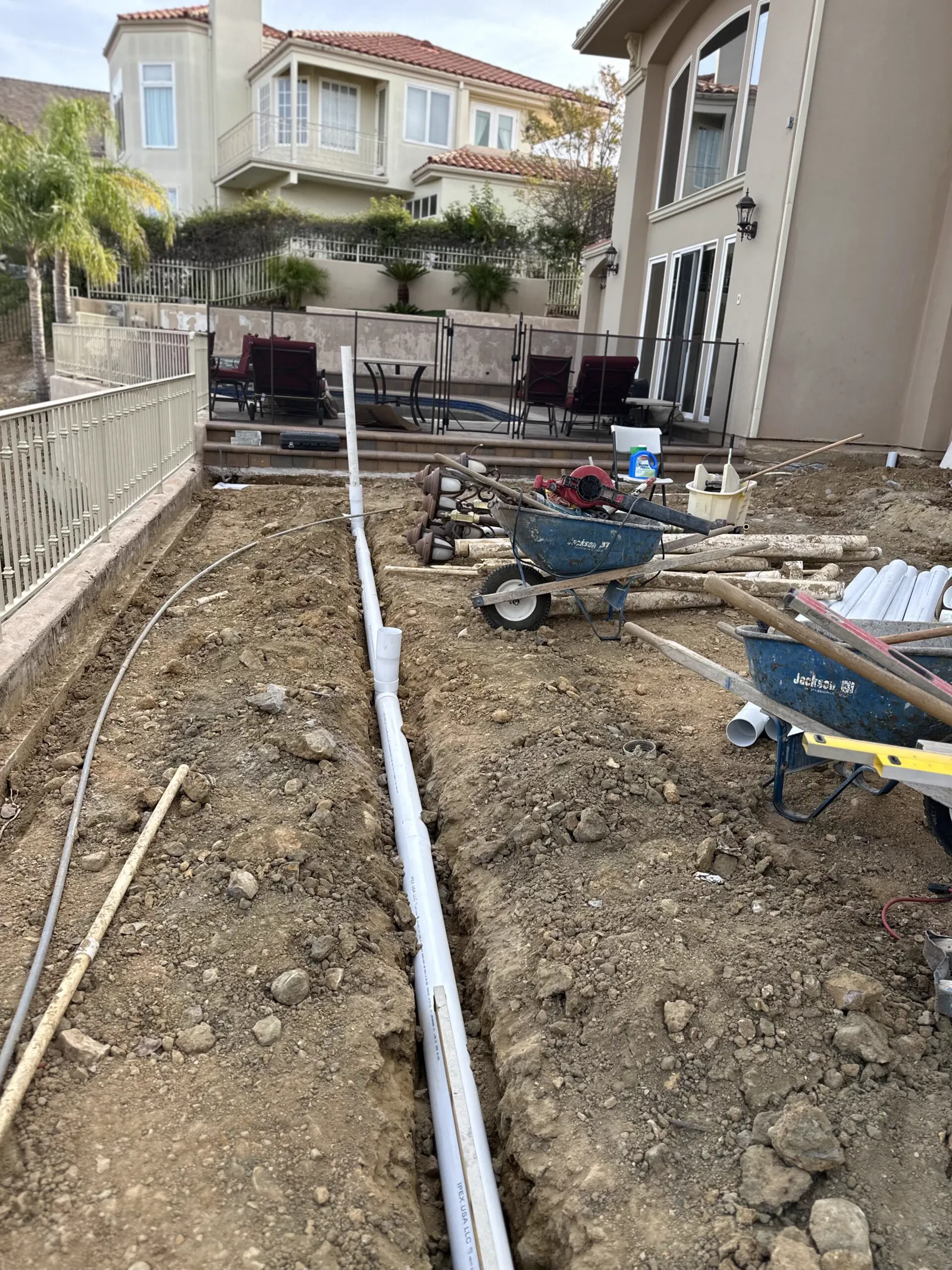
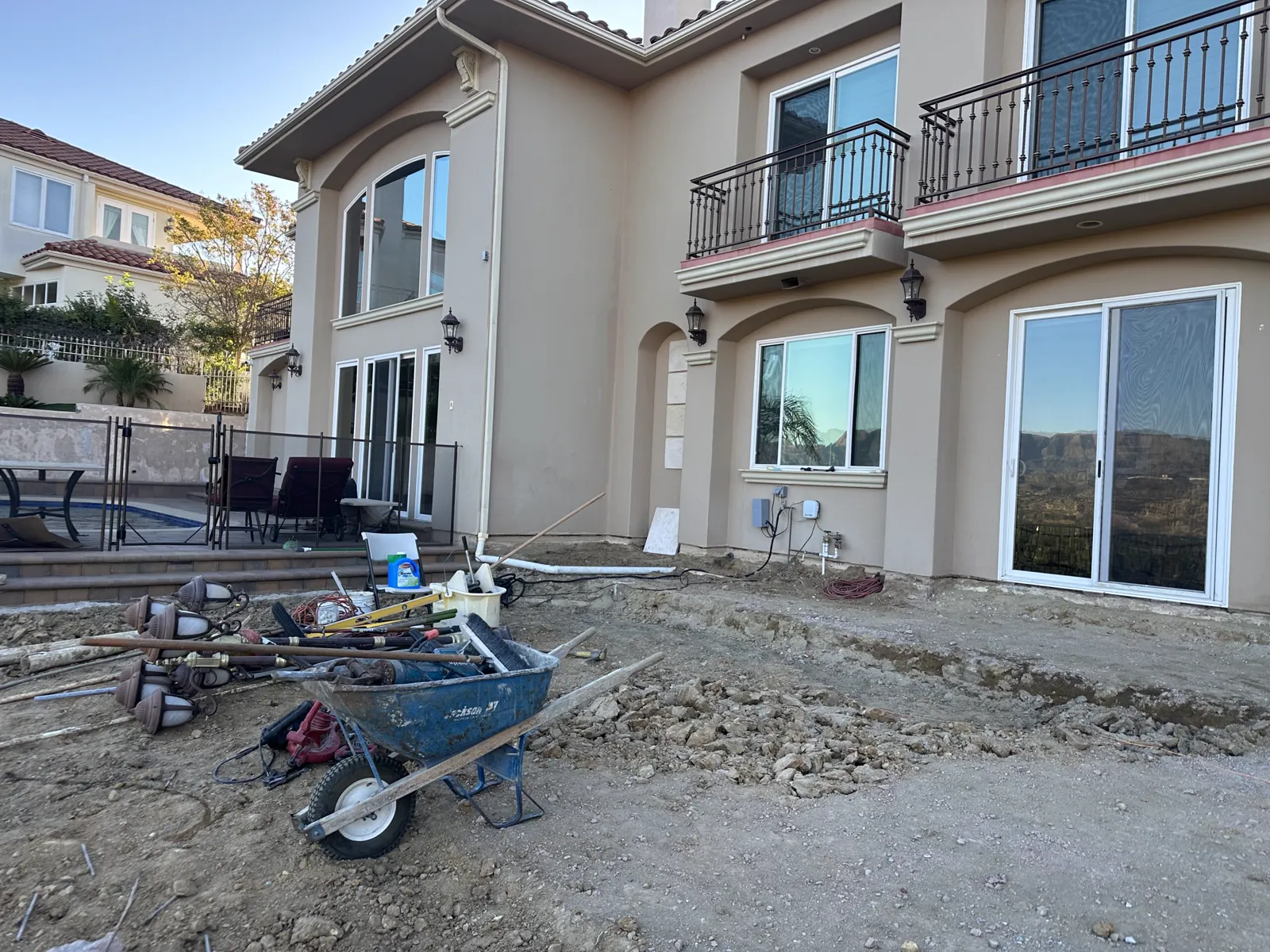
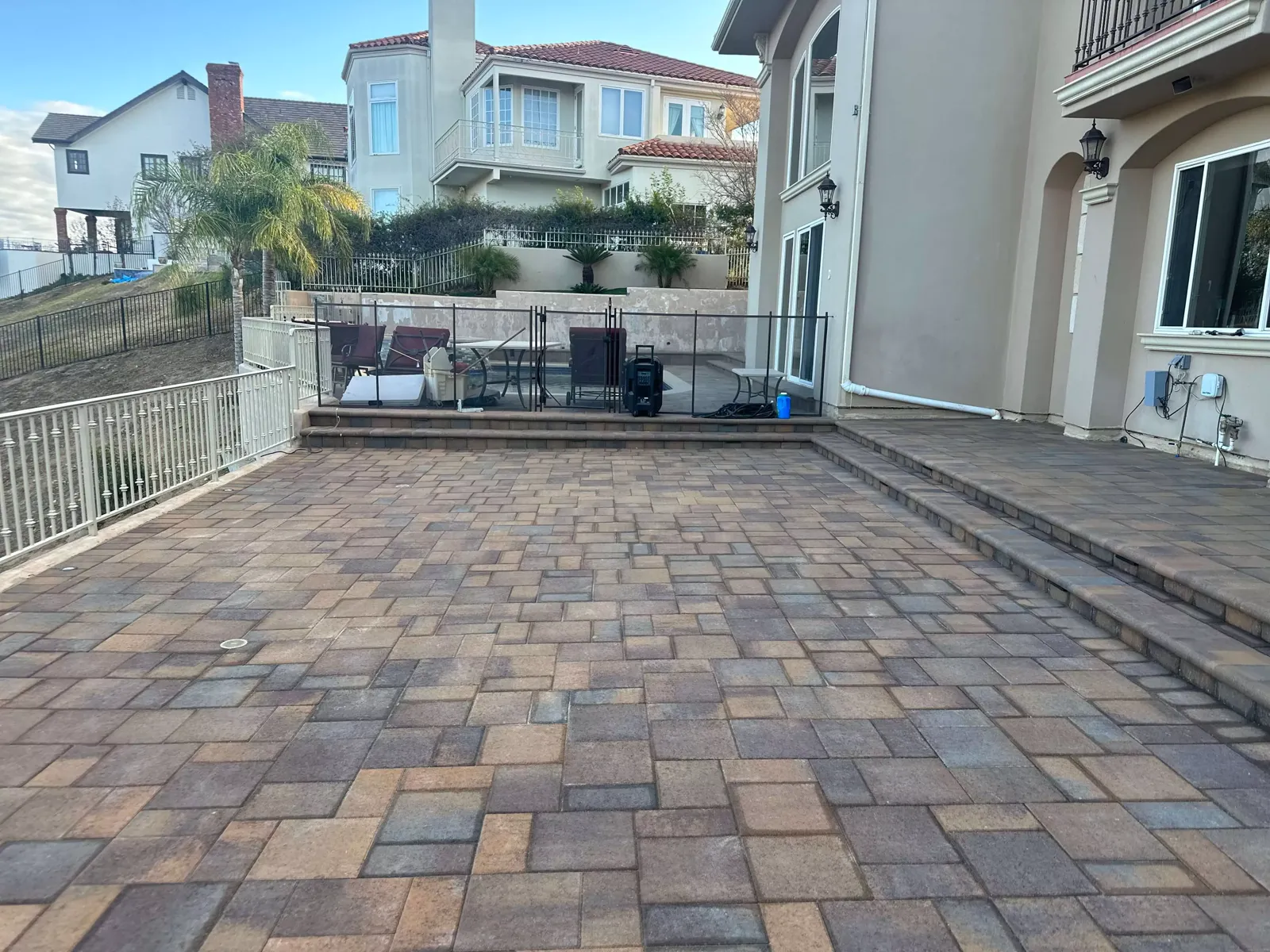
Both last when the base is right. Here is how they differ, so you can pick.
| Concrete | Pavers | |
|---|---|---|
| Look | One smooth surface with a broom finish and clean control joints. | Patterns, colors and borders, laid one piece at a time. |
| Cost | Usually less per square foot. | Usually more up front. |
| Cracks and repairs | Control joints guide cracks. A damaged section is cut out and poured again. | Joints flex as the ground moves. A broken paver lifts out and is replaced. |
| Ready to use | Walk on it in a day or two. Drive on it after about a week. | Ready in a day or two, once the joint sand sets. |
Side yards, carports, walks and pool decks from recent jobs.
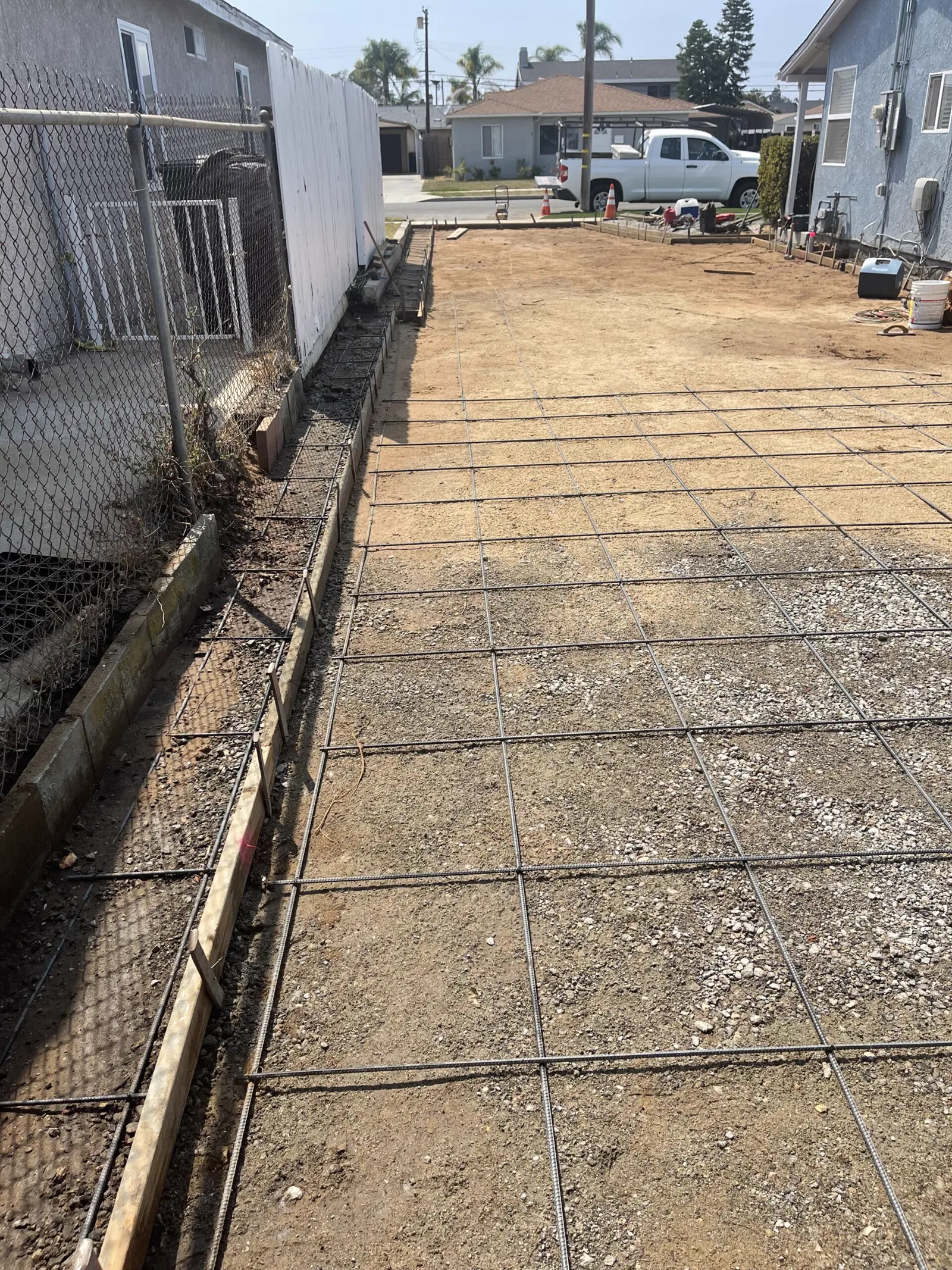
Side yard formed, steel on base
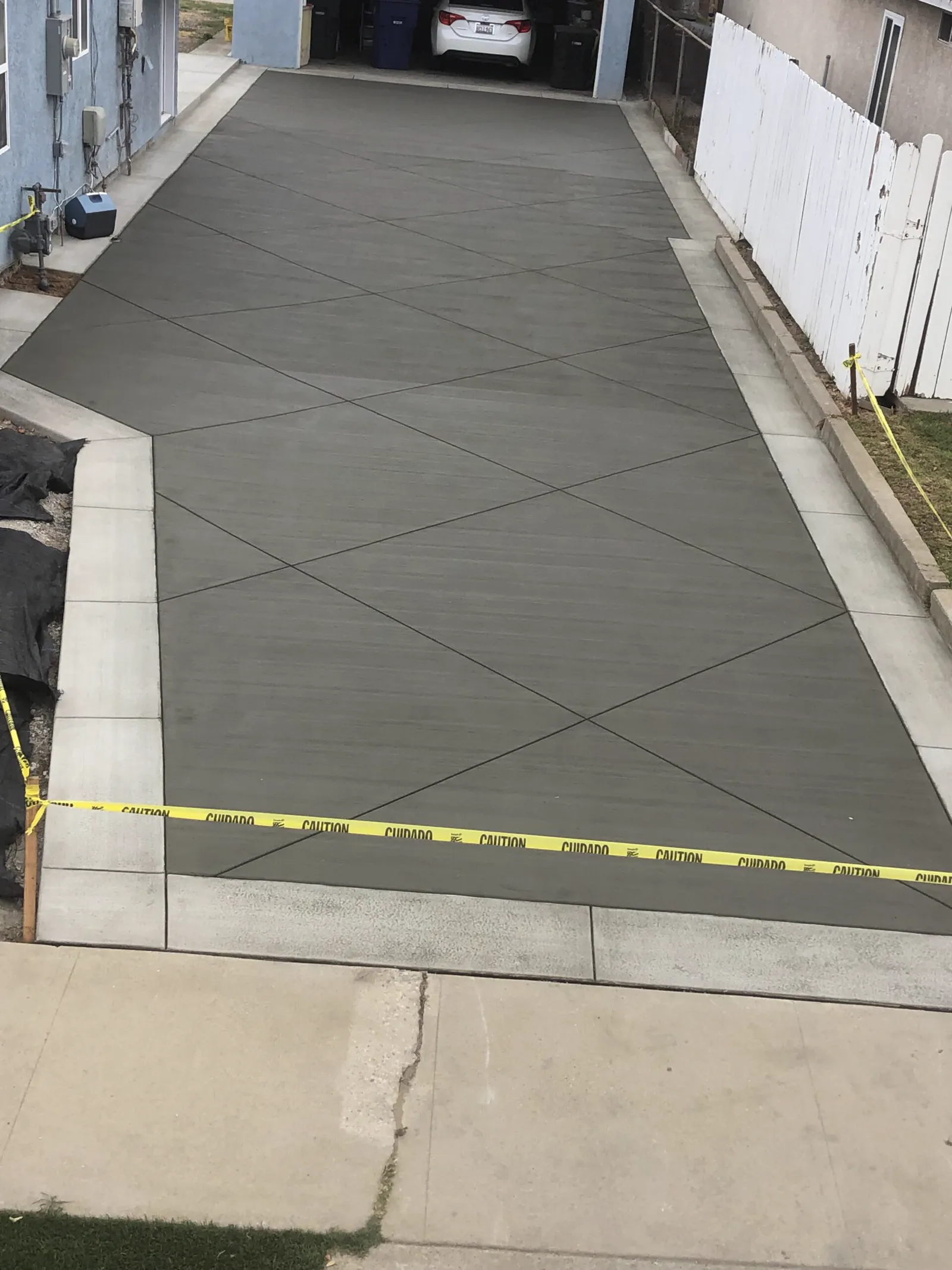
Side yard, fresh pour
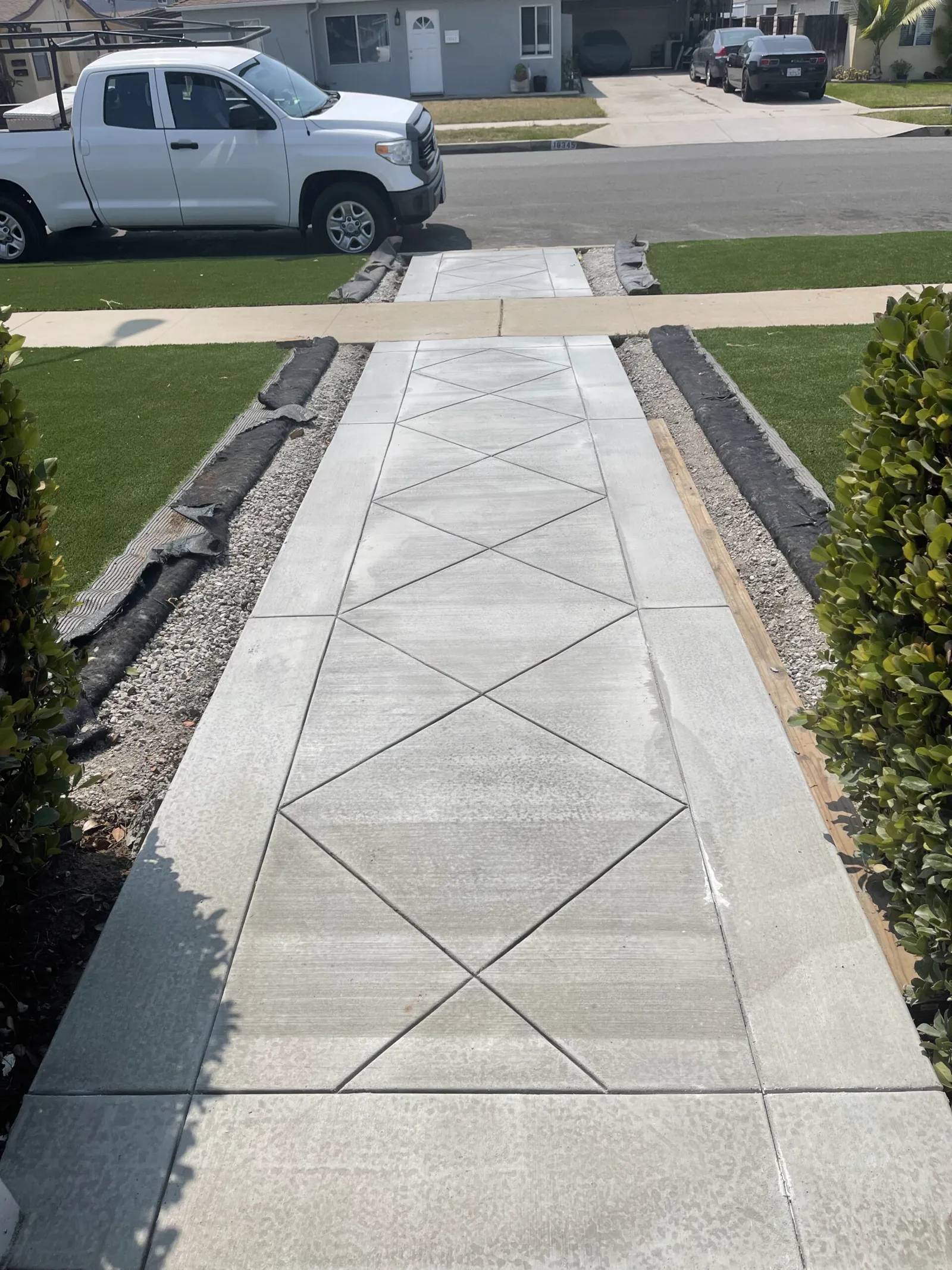
Front walk with diamond joints
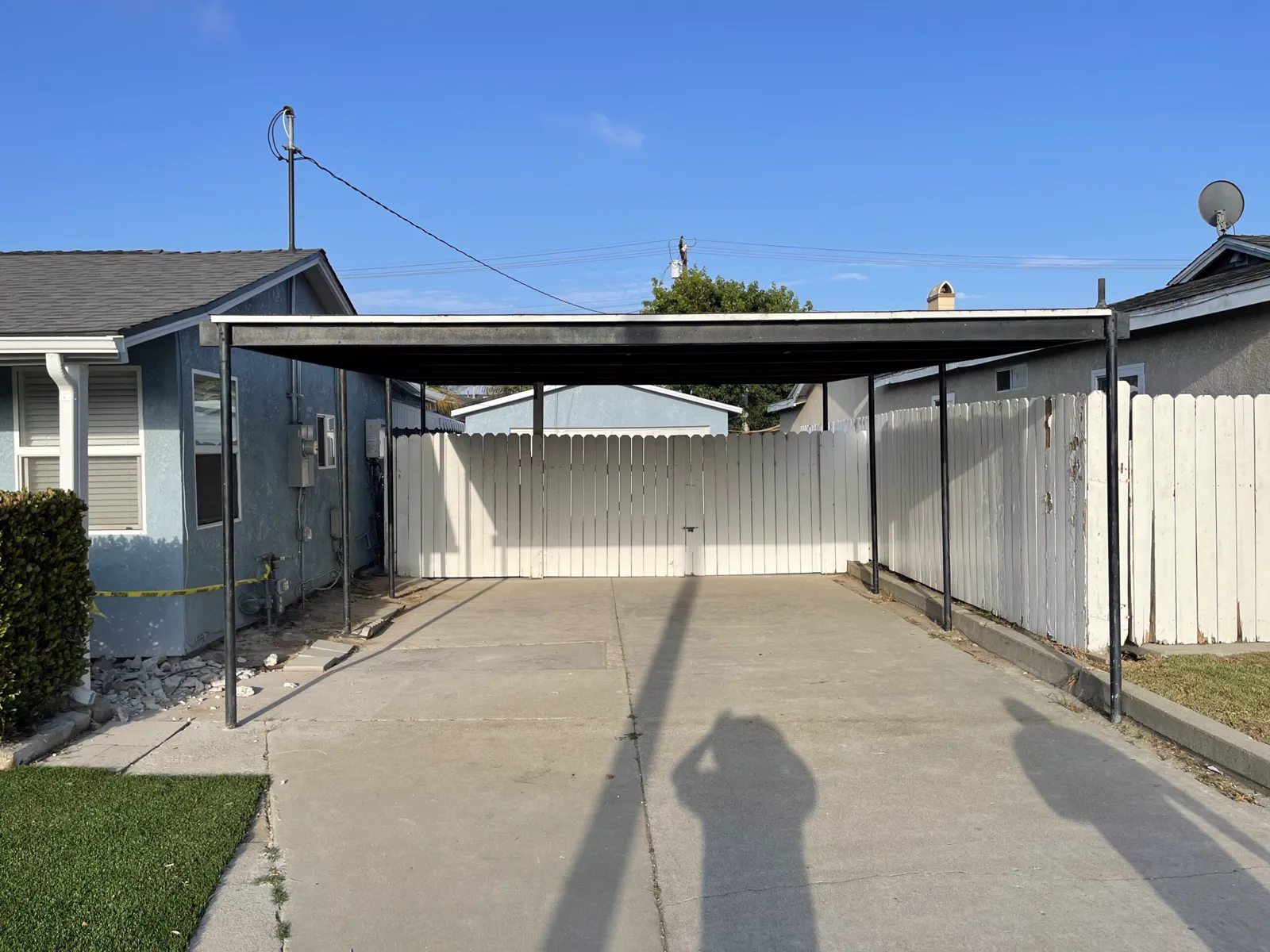
Carport slab
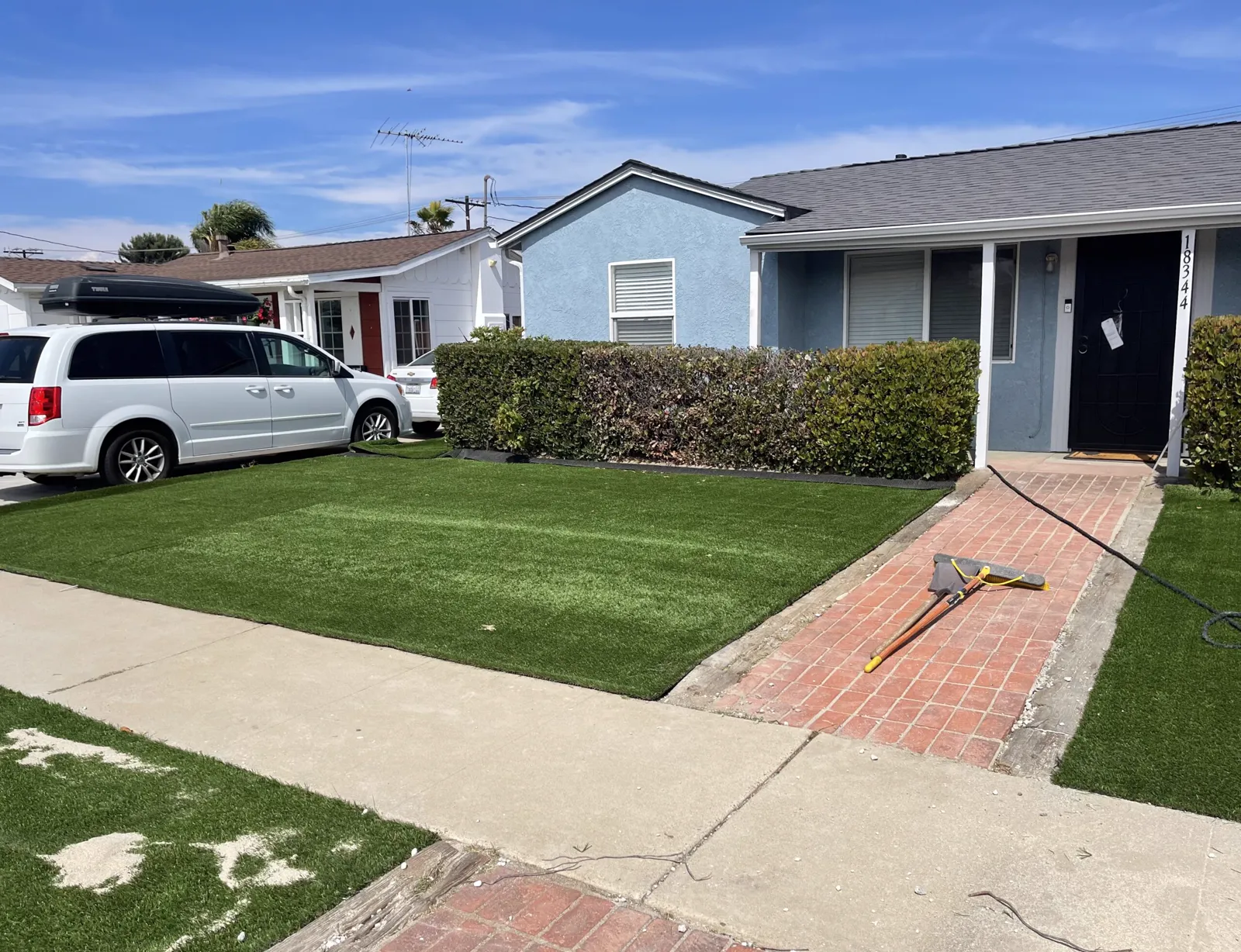
Brick paver walk and turf
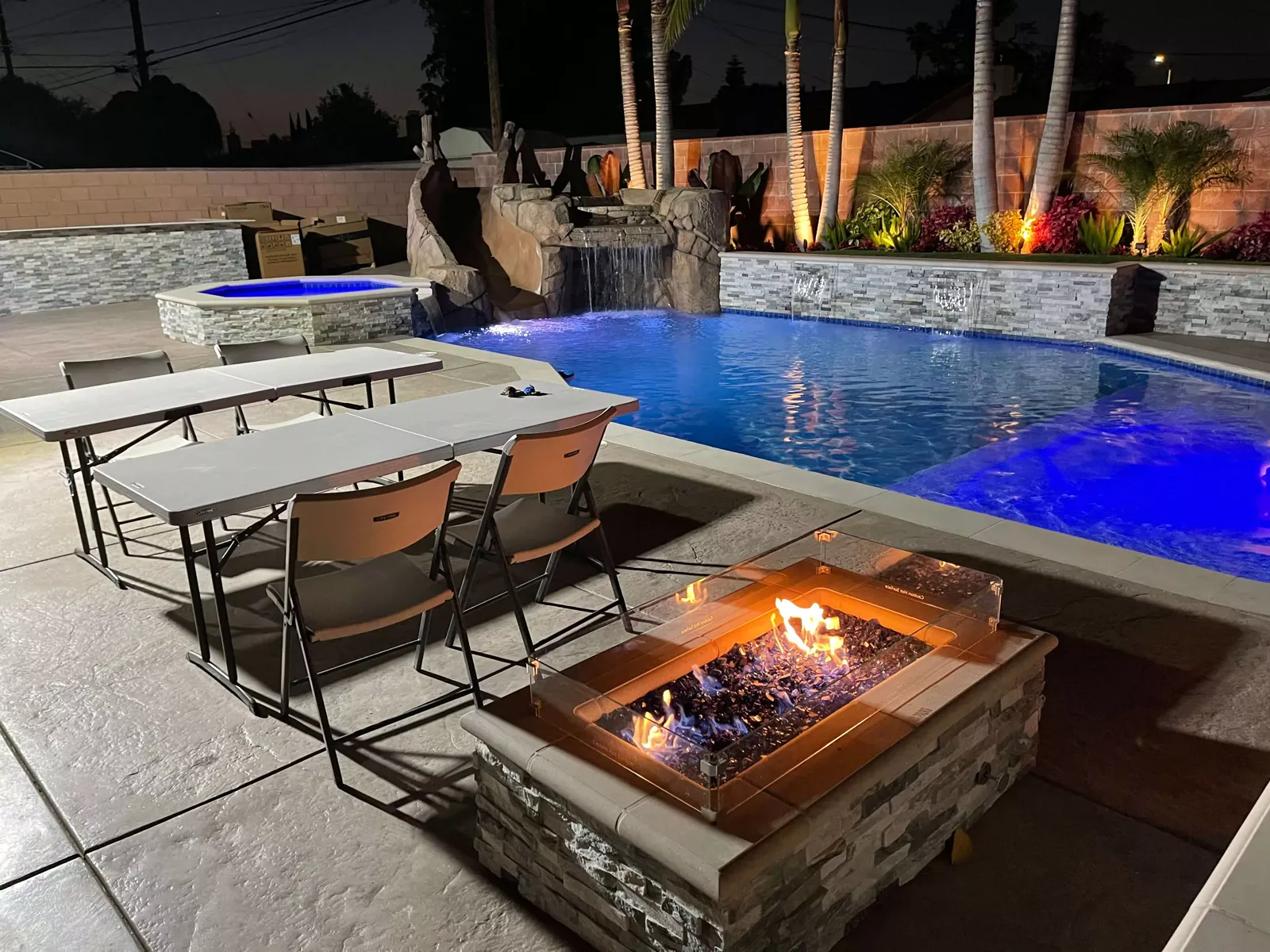
Pool deck and fire pit
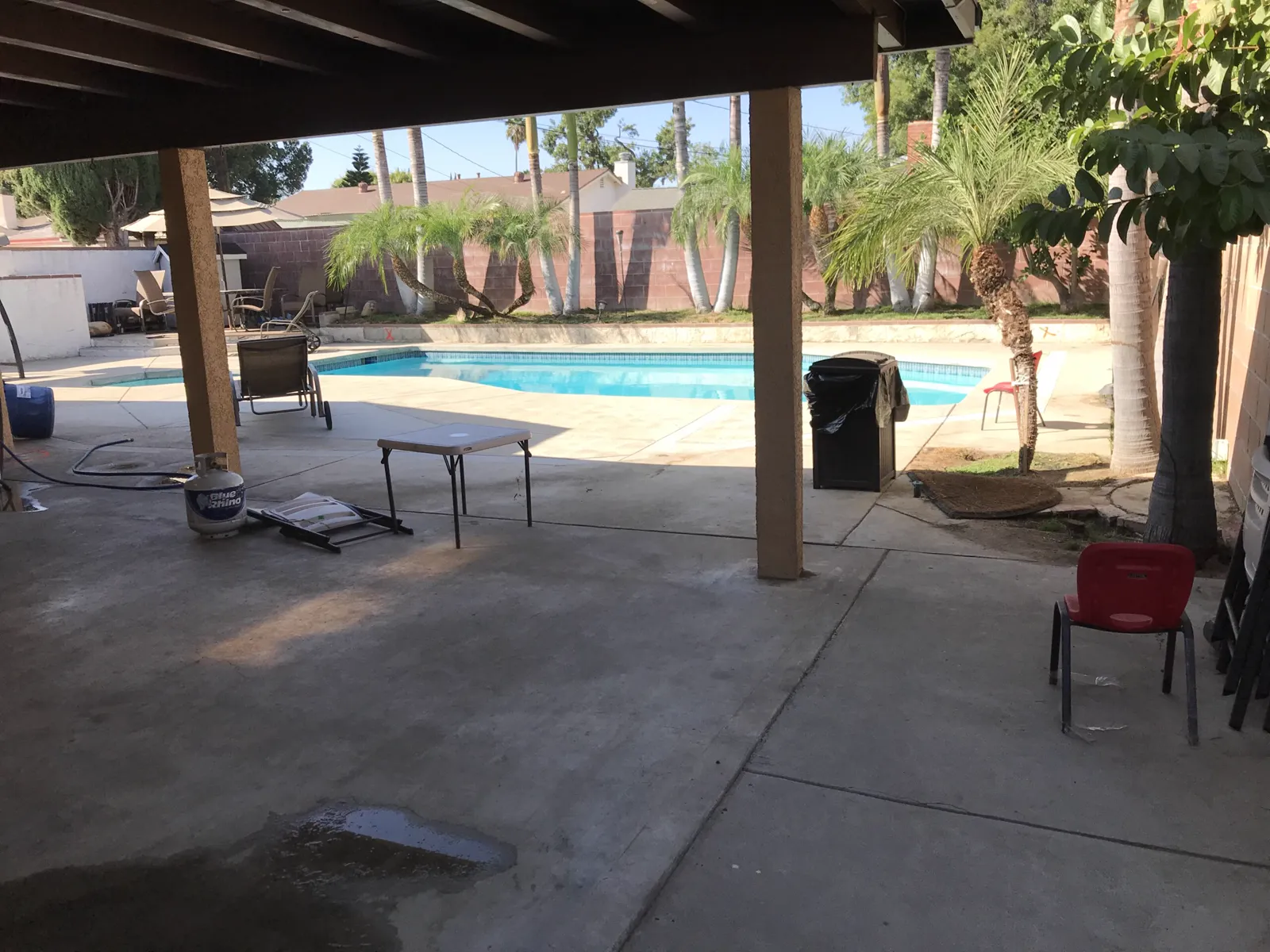
Patio under a new cover
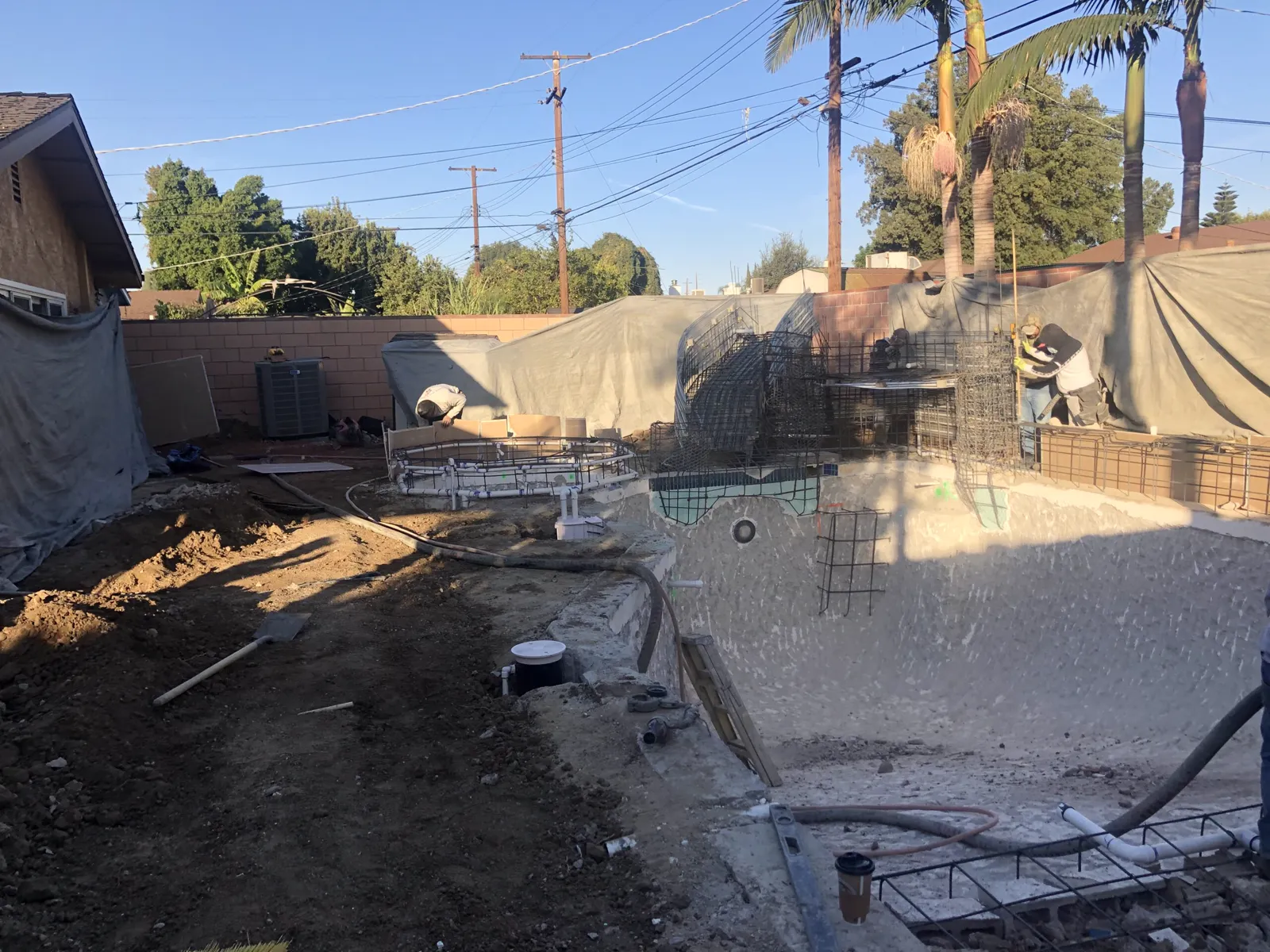
Pool and deck, mid-build
What homeowners ask before a driveway or patio.
Usually about a week. You can walk on it after a day or two, and we tell you when it is ready for a car.
Concrete can crack as it cures and as the ground moves. A compacted base, steel and control joints keep cracks small and put them where we choose.
Both work. Concrete usually costs less and is one smooth surface. Pavers cost more, come in many patterns, and a damaged paver can be lifted out and replaced.
Yes. Breaking out the old concrete and hauling it away is part of the job.
Work that touches the sidewalk, curb or driveway apron usually needs a city permit. We check what your city requires and handle it.
A photo of what is there now helps. We call back within one business day to set up a visit.